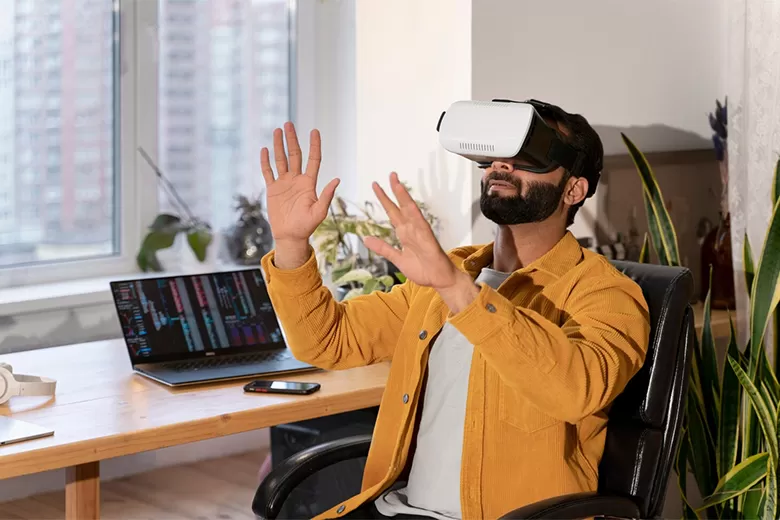
The way humans interact with digital systems is undergoing a fundamental transformation as spatial computing moves from experimental labs into real-world applications. By blending digital content with physical environments, spatial computing enables users to interact with information using natural movements, gestures, and spatial awareness rather than traditional screens and input devices.
This shift is redefining user experience across industries, from enterprise collaboration and design to education, healthcare, and entertainment.
What Is Spatial Computing?
Spatial computing refers to technologies that allow digital elements to exist and respond within a three-dimensional physical space. Using a combination of sensors, cameras, artificial intelligence (AI), and advanced displays, spatial computing systems understand depth, position, and movement in real time.
Unlike conventional computing, where interaction is limited to keyboards, touchscreens, or mice, spatial computing enables users to manipulate digital objects as if they were part of the physical world. This creates more intuitive and immersive experiences that closely match human behavior.
From Screens to Environments
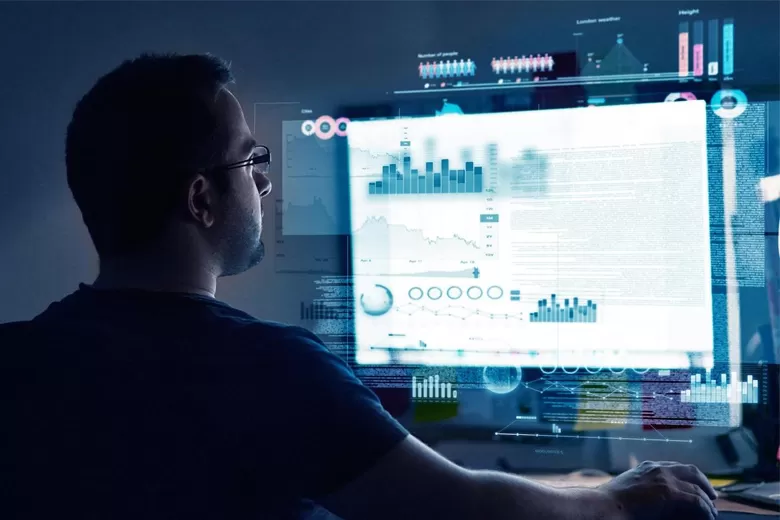
One of the most significant impacts of spatial computing is the gradual shift away from flat screens. Instead of viewing content on a single display, users can work within digital environments that surround them.
For example, virtual workspaces allow multiple screens to float in a physical room, enabling professionals to organize information spatially. Designers can interact with 3D models at real scale, while engineers can visualize complex systems before they are built.
This approach improves focus, reduces screen fatigue, and enhances understanding by aligning digital interaction with natural perception.
Enterprise Adoption Accelerates
Enterprises are increasingly adopting spatial computing to improve productivity and collaboration. Remote teams can meet in shared virtual spaces, interact with 3D data, and communicate more naturally than through traditional video calls.
Industries such as manufacturing and construction are using spatial computing for training, maintenance, and safety planning. Workers can receive real-time guidance overlaid onto physical equipment, reducing errors and downtime.
In healthcare, spatial computing supports medical visualization, surgical planning, and immersive training simulations. These applications demonstrate how immersive technology can deliver practical value beyond entertainment.
The Role of AI in Spatial Experiences
Artificial intelligence plays a critical role in making spatial computing effective. AI enables systems to recognize objects, track movement, interpret gestures, and adapt environments based on user behavior.
By combining spatial awareness with AI-driven context, systems can respond intelligently to user intent. For instance, a spatial interface might automatically adjust information placement based on where the user is looking or what task they are performing.
This integration results in experiences that feel responsive and personalized rather than static or scripted.
Design Challenges and Opportunities
Designing for spatial computing introduces new challenges for developers and UX teams. Traditional interface elements must be reimagined for three-dimensional spaces, requiring new design principles and interaction models.
Key considerations include:
- Spatial layout and depth perception
- Comfortable interaction distances
- Natural gesture and voice controls
- Minimizing cognitive and physical fatigue
At the same time, spatial computing offers creative freedom. Designers can create interfaces that mirror real-world interactions, making technology more accessible to users with varying levels of technical expertise.
Hardware and Accessibility Improvements
Advancements in hardware are making spatial computing more practical and comfortable. Devices are becoming lighter, more energy-efficient, and capable of delivering higher-resolution visuals with lower latency.
As costs decrease and accessibility improves, spatial computing is expected to expand beyond specialized use cases into mainstream adoption. This will open opportunities for web and app developers to create spatial-first applications optimized for immersive platforms.
Impact on Software Development
For software companies, spatial computing represents a shift in how applications are conceptualized and built. Developers must think beyond windows and buttons, designing experiences that exist within space.
This requires:
- New frameworks for 3D interaction
- Performance-optimized rendering pipelines
- Cross-platform compatibility
- Integration with AI and real-time data systems
As a result, spatial computing is influencing the evolution of software architecture and development workflows.
Looking Ahead
Spatial computing is not just a new interface — it is a new way of thinking about human-computer interaction. As the technology matures, it will blur the boundaries between physical and digital worlds, creating experiences that feel natural, immersive, and context-aware.
For businesses and developers, the opportunity lies in embracing spatial design principles early and building applications that take advantage of this emerging paradigm. The future of computing is no longer confined to screens — it exists all around us.