As digital systems become more deeply embedded in everyday life, cybersecurity is entering a new phase of urgency. In 2026, one of the most significant technology trends gaining momentum is quantum-safe security — a new approach to protecting data against future threats posed by quantum computing.
While large-scale quantum computers are not yet widely available, their potential impact on today’s encryption methods is driving proactive change across industries. Organizations are no longer waiting for quantum breakthroughs to happen; they are preparing now to ensure long-term data protection and trust.
Why Traditional Encryption Faces New Risks
Most modern digital security relies on cryptographic algorithms that would take classical computers thousands of years to break. However, quantum computers operate on fundamentally different principles. When mature, they could solve certain mathematical problems exponentially faster than today’s systems.
This means data encrypted today could be vulnerable in the future through a “harvest now, decrypt later” strategy. Sensitive information such as financial records, intellectual property, healthcare data, and government communications must remain secure for decades — not just years.
As awareness of this risk grows, businesses are beginning to reassess their security foundations rather than applying short-term fixes.
What Quantum-Safe Security Means
Quantum-safe (or post-quantum) security refers to cryptographic systems designed to resist both classical and quantum computing attacks. These systems rely on new mathematical approaches that are considered secure even in a quantum computing era.
Rather than replacing all security overnight, organizations are adopting hybrid strategies. These combine existing encryption methods with quantum-resistant algorithms, ensuring compatibility today while preparing for tomorrow.
This transition is not just a technical upgrade — it is a strategic shift in how digital trust is maintained.
Industries Leading the Shift
Certain sectors are moving faster than others due to the sensitivity and longevity of their data:
Financial services are prioritizing quantum-safe encryption to protect transactions, customer identities, and long-term records.
Healthcare organizations are focused on safeguarding patient data that must remain confidential for a lifetime.
Government and defense systems are investing in future-proof security frameworks to protect national infrastructure and communications.
Technology companies are embedding quantum-safe options into cloud platforms, APIs, and enterprise software to support clients globally.
This cross-industry movement signals that quantum-safe security is no longer theoretical — it is becoming a practical requirement.
Impact on Web and Application Development
For web and app development companies, quantum-safe security introduces a new layer of responsibility. Applications are increasingly expected to be built with long-term security in mind, not just current compliance standards.
Developers must consider how encryption is implemented across data storage, APIs, authentication flows, and communication layers. This includes planning for algorithm agility — the ability to update cryptographic methods without redesigning entire systems.
Forward-thinking development teams are already designing architectures that can evolve as security standards change. This approach reduces future risk and enhances client confidence.
Cloud Platforms and Infrastructure Evolution
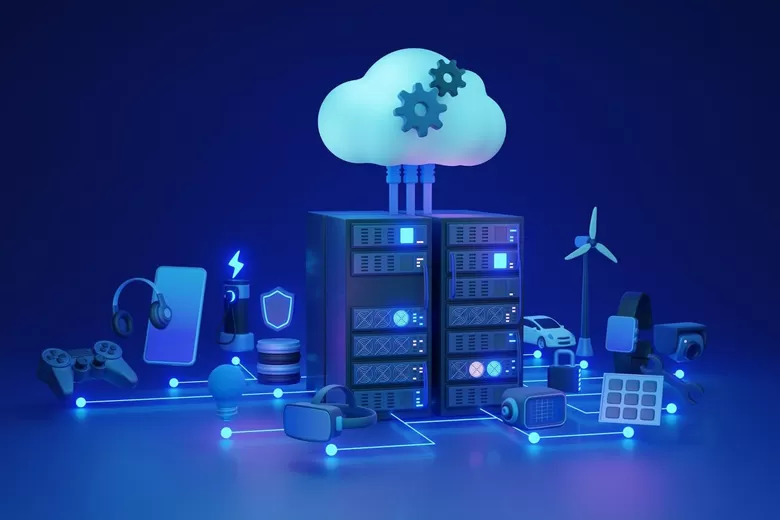
Cloud infrastructure plays a central role in the transition to quantum-safe security. Many organizations rely on cloud providers for encryption, key management, and secure data processing.
In response, cloud platforms are beginning to offer quantum-safe cryptography options as part of their security toolkits. This allows businesses to adopt new standards without rebuilding infrastructure from scratch.
At the same time, hybrid and edge computing environments must also be secured consistently. Ensuring uniform protection across distributed systems is one of the key challenges of modern cybersecurity.
Security as a Competitive Advantage
In 2026, security is no longer just a compliance requirement — it is a competitive differentiator. Customers, partners, and regulators are increasingly aware of future risks and expect businesses to act responsibly.
Organizations that demonstrate preparedness for emerging threats gain trust and credibility. Quantum-safe readiness signals long-term thinking, technical maturity, and commitment to data protection.
For technology service providers, this creates an opportunity to offer security-focused solutions that go beyond basic development and maintenance.
Preparing for the Transition
Adopting quantum-safe security does not require immediate, sweeping changes. Instead, experts recommend a phased approach:
- Assess current cryptographic dependencies
- Identify data that requires long-term confidentiality
- Design systems with upgradeable security components
- Monitor evolving standards and best practices
- Educate teams about future security risks
By starting early, organizations can spread costs over time and avoid rushed, reactive changes later.
Looking Ahead
Quantum computing represents both innovation and disruption. While its full impact may still be years away, the decisions made today will determine how secure digital systems remain in the future.
Quantum-safe security is emerging as a defining technology trend of 2026 — not because quantum computers are everywhere, but because responsible organizations are planning ahead. As digital transformation accelerates, future-proof security will be essential to sustaining growth, trust, and resilience in an increasingly connected world.