Artificial intelligence is rapidly moving closer to where data is created. In 2026, Edge AI has become one of the most influential technology trends, enabling real-time intelligence directly on devices, sensors, and local systems rather than relying solely on centralized cloud platforms. This shift is transforming how enterprises design applications, respond to data, and deliver faster, smarter digital experiences.
Edge AI represents the convergence of AI models and edge computing, allowing machines to analyze data locally with minimal delay. As organizations demand faster insights, lower latency, and improved privacy, Edge AI is emerging as a critical foundation for modern digital infrastructure.
Why Edge AI Is Gaining Momentum
Traditional AI architectures depend heavily on cloud computing. While cloud-based AI offers scalability and power, it introduces latency, bandwidth costs, and potential privacy concerns. Edge AI addresses these challenges by processing data closer to the source.
In many real-world scenarios — such as manufacturing floors, smart retail environments, healthcare monitoring, and connected vehicles — milliseconds matter. Edge AI enables instant decision-making without waiting for data to travel back and forth to distant servers.
As devices become more capable and AI models more efficient, enterprises are increasingly shifting intelligence to the edge.
Real-Time Decision-Making at Scale
One of the most significant advantages of Edge AI is real-time responsiveness. Systems can detect patterns, identify anomalies, and trigger actions instantly. This capability is critical for use cases that require continuous monitoring and immediate feedback.
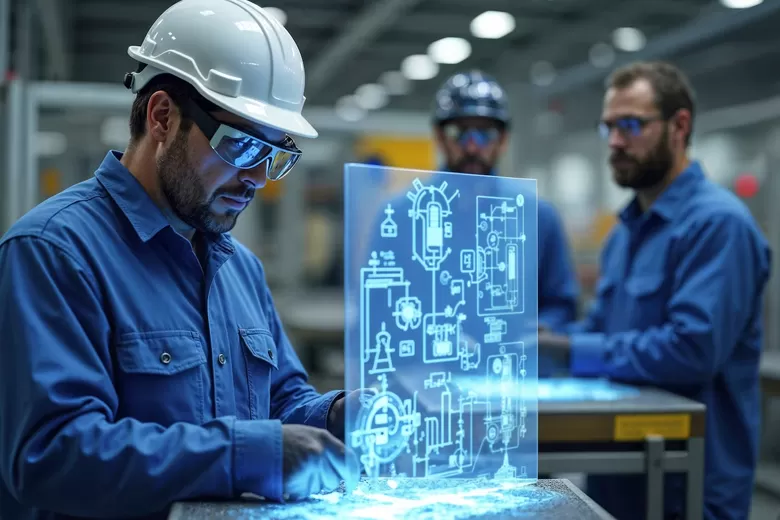
In industrial environments, Edge AI helps detect equipment failures before they occur, reducing downtime and maintenance costs. In retail, it enables real-time inventory tracking and customer behavior analysis. In healthcare, wearable and monitoring devices can identify irregularities and alert professionals instantly.
These real-time insights allow businesses to move from reactive operations to proactive strategies.
Privacy and Data Control Benefits
Data privacy has become a top concern for organizations and users alike. Edge AI supports privacy-first design by keeping sensitive data on local devices rather than transmitting it to centralized systems.
For industries handling personal or regulated data, this approach reduces exposure and compliance risk. Processing data locally also minimizes dependence on constant connectivity, ensuring systems continue to function even during network disruptions.
This combination of privacy, resilience, and autonomy makes Edge AI particularly attractive in regulated and mission-critical environments.
Impact on Enterprise Architecture
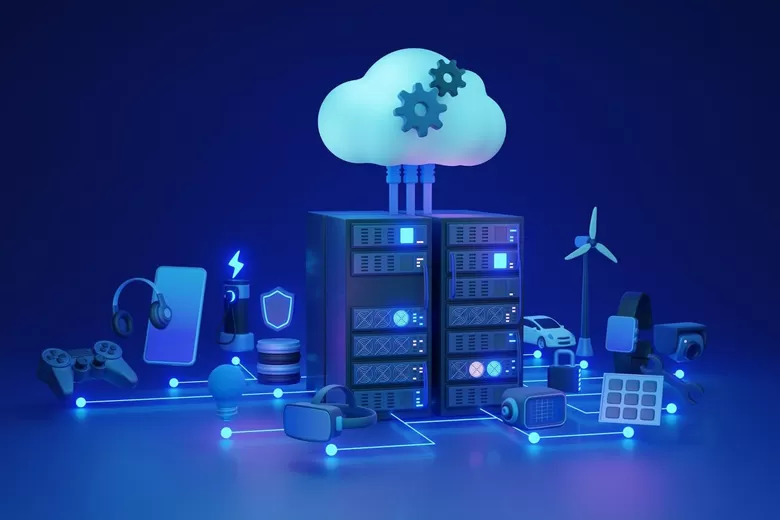
The rise of Edge AI is reshaping enterprise technology architecture. Instead of centralized intelligence, systems are becoming distributed, with intelligence embedded across devices and locations.
This shift requires careful planning. Enterprises must manage model updates, security, monitoring, and performance across thousands or even millions of edge endpoints. As a result, orchestration platforms and intelligent device management are becoming essential components of Edge AI ecosystems.
Rather than replacing cloud AI, Edge AI complements it. Cloud platforms continue to play a vital role in training models, aggregating insights, and coordinating large-scale intelligence, while the edge focuses on execution and responsiveness.
Edge AI and Application Development
For web and application development companies, Edge AI introduces new design considerations. Applications are no longer purely cloud-based; they must operate across hybrid environments that include browsers, mobile devices, IoT hardware, and local servers.
Developers are increasingly building AI-powered features that function offline or with limited connectivity. This includes intelligent caching, local inference, and adaptive user experiences based on real-time context.
Edge AI also encourages more efficient coding practices. Models must be optimized for performance and resource usage, pushing development teams to balance accuracy, speed, and hardware constraints.
Industry Adoption Accelerates
Edge AI adoption is accelerating across multiple sectors:
- Manufacturing uses Edge AI for predictive maintenance, quality inspection, and robotics.
- Retail leverages real-time analytics for dynamic pricing, customer flow analysis, and loss prevention.
- Healthcare applies Edge AI to patient monitoring, diagnostics, and personalized care.
- Transportation and logistics rely on Edge AI for route optimization, vehicle monitoring, and automation.
- Smart cities use Edge AI to manage traffic, energy, and public safety systems.
These applications demonstrate how Edge AI is becoming a core enabler of intelligent operations.
Security Challenges and Solutions
With intelligence distributed across the edge, security becomes both more important and more complex. Each edge device represents a potential attack surface that must be protected.
Organizations are responding by implementing strong device authentication, encrypted communication, secure boot mechanisms, and continuous monitoring. AI models themselves must also be protected from tampering and misuse.
Despite these challenges, Edge AI can enhance security by detecting threats locally and responding faster than centralized systems.
Competitive Advantage Through Speed and Intelligence
In 2026, speed is a competitive advantage. Businesses that can sense, analyze, and act in real time outperform those that rely on delayed insights. Edge AI enables this agility by bringing intelligence directly into operational workflows.
Companies investing in Edge AI are not just improving performance — they are unlocking new business models, enhancing customer experiences, and increasing operational resilience.
For technology service providers, Edge AI represents a growing opportunity to deliver value through intelligent system design, optimization, and integration.
The Road Ahead
Edge AI is still evolving, but its trajectory is clear. As hardware becomes more powerful, models become lighter, and tools become more accessible, intelligence will continue to spread outward from centralized systems to the edge of networks.
This transformation marks a shift in how digital systems are conceived — from centralized intelligence to distributed, adaptive ecosystems. In this new era, Edge AI is not just a trend; it is a cornerstone of real-time, intelligent enterprise computing.