As organizations accelerate their digital transformation initiatives, a new concept is gaining traction across industries: Digital Twins. Originally popularized in manufacturing and industrial engineering, Digital Twins are now expanding into software platforms, smart infrastructure, healthcare systems, and large-scale digital services. By creating virtual representations of real-world systems, Digital Twins enable businesses to simulate, monitor, and optimize complex operations with unprecedented insight.
A Digital Twin is essentially a dynamic virtual model of a physical or digital system. It continuously receives data from real-world sources such as sensors, APIs, operational systems, and user activity. This live data allows the digital replica to reflect the current state of its real counterpart. Unlike static simulations, Digital Twins evolve in real time, making them highly valuable for analysis, forecasting, and decision-making.
In modern software ecosystems, Digital Twins are increasingly used to model complex digital infrastructure. Large cloud environments, distributed systems, and enterprise platforms can be mirrored digitally to analyze system behavior under different conditions. Engineers can run simulations on the twin environment to test performance improvements, identify vulnerabilities, and explore optimization strategies before applying changes to production systems.
One of the most powerful advantages of Digital Twins is predictive insight. By analyzing historical and real-time data together, organizations can anticipate failures, bottlenecks, and inefficiencies before they occur. In industrial environments, this helps reduce downtime and maintenance costs. In digital platforms, it enables teams to forecast traffic spikes, infrastructure stress, and service degradation before users are affected.
Digital Twins also play a significant role in smart cities and infrastructure management. Urban planners and government agencies use Digital Twins to simulate transportation systems, energy usage, environmental conditions, and population movement. These insights help leaders make better long-term decisions about infrastructure investments, sustainability initiatives, and emergency preparedness.
In the world of web platforms and SaaS systems, Digital Twins are starting to model user ecosystems. Companies can build digital representations of user journeys, product usage patterns, and service interactions. This allows product teams to test new features, pricing models, and user experience improvements in simulated environments before releasing them globally.
Another growing use case is operational intelligence. Businesses often struggle to gain a unified view of how multiple systems interact across departments. Digital Twins can aggregate data from various sources—applications, services, devices, and analytics platforms—into a single dynamic model. This holistic visibility enables leaders to understand dependencies and make more informed strategic decisions.
The rise of IoT has significantly accelerated Digital Twin adoption. Connected devices continuously generate operational data, providing the raw input needed to maintain accurate virtual models. From manufacturing equipment and logistics networks to smart homes and healthcare devices, IoT feeds Digital Twins with the information required to simulate real-world behavior with increasing accuracy.
For developers and software architects, Digital Twins offer a powerful testing and innovation platform. Instead of experimenting directly in production environments, teams can safely explore new architectures, infrastructure scaling strategies, and feature releases within a digital replica. This reduces risk while encouraging experimentation and continuous improvement.
Artificial intelligence further enhances the capabilities of Digital Twins. Machine learning models can analyze patterns within the twin environment and suggest optimizations automatically. For example, AI can recommend infrastructure adjustments, workflow improvements, or predictive maintenance actions based on observed system behavior.
Security is another area where Digital Twins provide value. By simulating cyberattack scenarios and system stress conditions, organizations can evaluate how their infrastructure would respond to potential threats. This proactive testing helps strengthen defenses and improve incident response strategies before real incidents occur.
As organizations collect increasing amounts of operational data, the accuracy and usefulness of Digital Twins continue to improve. The more data a system provides, the more precise the twin becomes. Over time, these models can evolve into sophisticated decision-support systems capable of guiding business strategy, operational improvements, and long-term planning.
However, implementing Digital Twins also presents challenges. Data integration is one of the largest obstacles. Organizations often operate multiple legacy systems that were never designed to share data seamlessly. Building a reliable Digital Twin requires establishing strong data pipelines, governance frameworks, and interoperability standards.
Another challenge is computational complexity. Simulating large-scale systems in real time can require substantial computing resources. Advances in cloud computing, distributed processing, and edge technologies are helping overcome these limitations, making Digital Twins more accessible for organizations of all sizes.
Privacy and security must also be carefully managed. Since Digital Twins often rely on large volumes of operational and user data, organizations must ensure that sensitive information is protected. Proper anonymization, encryption, and access controls are essential when building and maintaining these systems.
Despite these challenges, Digital Twins are rapidly becoming a strategic asset. Industries such as manufacturing, transportation, healthcare, finance, and technology are investing heavily in the technology. As digital ecosystems grow more interconnected, the ability to visualize and simulate entire systems will become increasingly valuable.
Looking ahead, Digital Twins are likely to evolve beyond operational monitoring into fully autonomous optimization systems. Combined with AI and real-time analytics, future Digital Twins may automatically adjust systems to improve efficiency, reduce costs, and enhance user experiences without human intervention.
For modern digital platforms, the concept represents a shift in how systems are understood and managed. Instead of reacting to problems after they occur, organizations can observe, simulate, and predict system behavior continuously. This proactive intelligence provides a major competitive advantage in fast-moving digital markets.
In conclusion, Digital Twins are transforming how businesses understand and operate complex systems. By bridging the physical and digital worlds, they provide real-time visibility, predictive insights, and powerful simulation capabilities. As technology continues to advance, Digital Twins will play a central role in shaping the next generation of intelligent, data-driven organizations.
Beyond operational visibility, Digital Twins are increasingly influencing how organizations design new products and digital services. Traditionally, product development relied on prototypes, staged testing environments, and gradual rollout strategies. While effective, these approaches often take significant time and resources. With Digital Twin environments, teams can simulate product behavior, user interactions, and system dependencies much earlier in the lifecycle. This accelerates innovation while reducing the cost of experimentation.
In software engineering, this capability is especially valuable for large-scale platforms. Complex applications involve multiple microservices, APIs, databases, and user flows. A Digital Twin of the system allows developers to observe how changes ripple across the architecture before they are deployed. Teams can experiment with new features, infrastructure adjustments, or integrations while safely measuring performance, stability, and user impact.
Another emerging application is customer experience optimization. Businesses are beginning to create Digital Twins of customer journeys by combining analytics data, behavioral insights, and product interaction patterns. These models allow organizations to test how design changes, new features, or onboarding flows might influence engagement and retention. Instead of relying solely on A/B testing after launch, companies can predict outcomes and refine experiences earlier.
Supply chain ecosystems are also benefiting from Digital Twin technology. Modern supply networks involve manufacturers, logistics providers, warehouses, retailers, and digital tracking systems. A Digital Twin of the supply chain can simulate disruptions, demand fluctuations, and route optimization strategies. This helps organizations prepare for uncertainty while improving efficiency and resilience.
In industries like healthcare, Digital Twins are being explored to simulate medical workflows, hospital resource allocation, and even patient-specific treatment models. By analyzing real-world data within virtual environments, healthcare providers can improve planning, reduce risks, and support more personalized care strategies. Although still evolving, the potential impact is significant.
Another powerful advantage of Digital Twins lies in sustainability and environmental planning. Organizations are under growing pressure to reduce emissions, energy usage, and waste. Digital Twins enable simulation of energy consumption, operational efficiency, and environmental impact before implementing real-world changes. Businesses can test greener strategies and identify the most effective improvements with minimal disruption.
The integration of edge computing is further expanding what Digital Twins can achieve. Instead of relying solely on centralized cloud systems, edge devices can process and send localized data to update twin environments instantly. This allows faster insights and more responsive decision-making, particularly in industries like manufacturing, transportation, and smart infrastructure.
Standardization is also beginning to shape the future of Digital Twin ecosystems. As more organizations adopt the concept, industry frameworks and interoperability standards are emerging to ensure systems can share and interpret data effectively. This will allow Digital Twins from different organizations, vendors, or sectors to interact, creating broader digital ecosystems.
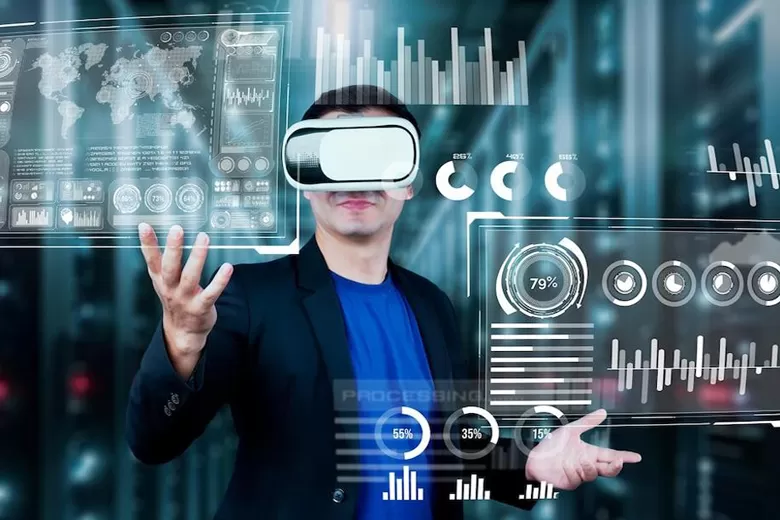
Another important development is visualization technology. Modern Digital Twins often incorporate advanced dashboards, 3D environments, and interactive analytics interfaces. These tools help stakeholders understand complex systems more intuitively. Executives, engineers, and analysts can explore system performance visually, making insights easier to interpret and act upon.
As digital platforms become more interconnected, Digital Twins may eventually represent entire business ecosystems rather than isolated systems. Companies could simulate partnerships, market conditions, and operational dependencies in a unified digital environment. This level of visibility would transform strategic planning and risk management.
Education and workforce training may also benefit from this technology. Digital Twin simulations can replicate real operational environments where employees can learn, experiment, and practice decision-making safely. This reduces training risks and improves readiness for real-world scenarios.
Ultimately, Digital Twins represent a shift toward predictive and simulation-driven operations. Instead of relying solely on historical data or reactive monitoring, organizations can actively explore potential futures before committing to major decisions. This forward-looking capability is becoming increasingly valuable in a world defined by rapid technological change and market uncertainty.
As adoption continues to grow, Digital Twins will likely become a core layer of digital infrastructure. Businesses that invest early in building accurate, data-rich digital models will gain deeper operational intelligence and greater strategic flexibility. Over time, the line between physical operations and digital simulation will continue to blur, enabling smarter, more adaptive organizations.